The world economy is in the eye of a potential storm where stagflation seems to be a more likely occurrence than ever before. Investors are re-examining their portfolio plans, and now, digital assets are at the center stage. Cryptocurrencies are balanced in an ambiguous state between risk and opportunity.
Understanding Stagflation and Its Triggers
Stagflation refers to the situation in which a country is characterized by inflation, declining economy and increased unemployment. Stagflation will offer a background in which the traditional monetary policy solutions will fail to help resolve both issues. The occurrence of such is so unusual with inflation observed and no growth witnessed that it raises the question of the risk tolerance to the investor.
Central banks experience difficult decisions because, if they increase interest rates, their economy will slow down, but if they reduce rates, their inflation rate may increase. For example, having conflicting fiscal policies, as well as monetary policies, will result in both inflation and unemployment.
The U.S. economy is exhibiting tendencies of having inflation higher than projections, as well as a gradual increase in unemployment rates, as of 2025. A slowing GDP rate has also contributed to further affirmations of economic uncertainties. With all pointers converging, the threat of stagflation isn’t something that the world of finance wants.
Why Crypto May Suffer During Stagflation
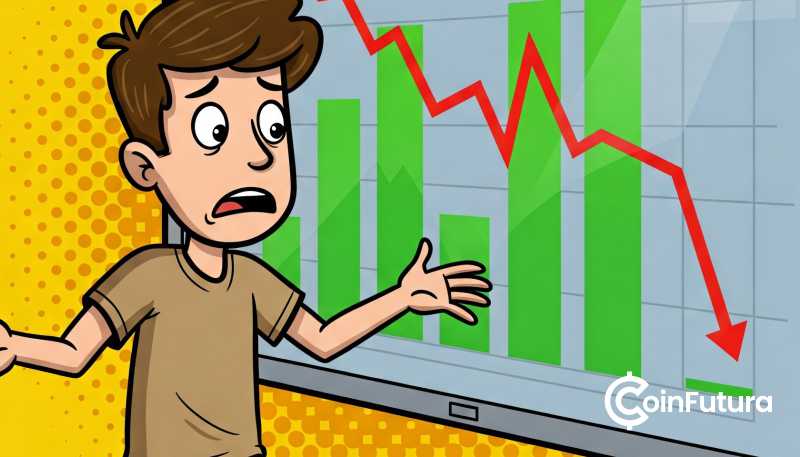
Liquidity, investor confidence, and risk-taking attitude among investors in the face of uncertainty are among the factors that ensure crypto markets perform well. In stagflation, money becomes tighter and traders will shift to some more conventional safe-haven, e.g. gold or treasury bonds. In this way, the speculative demand of digital tokens tends to decline.
In times of economic stress,altcoins are usually the ones that take most of the hit because of their generally lower market capitalization and higher volatility. Bitcoin tends to fare slightly better, still under pressure as a risk-on asset. “Despite macro fears, Bitcoin surged to $126,000, showing its relative strength,” said the analyst Umair.
Whale activity is cautious, with large holders reducing exposure to smaller tokens ahead of potential market downturns. This reflects lowered expectations and reduced capital flow in the broad crypto market. As uncertainty rises, risk aversion moves quickly throughout the ecosystem.
How Bitcoin Stands Out in Economic Uncertainty
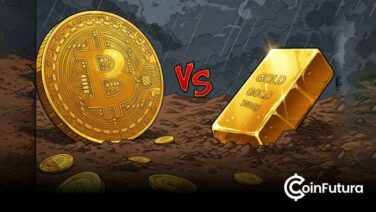
Bitcoin can also be considered alongside gold as a result of its scarcity, as well as its decentralized nature, thus guaranteeing its value as a store of value. It is independent of central banking, thus uncontrolled in terms of monetary policy.
However, Bitcoin is still considered a risk asset as it tends to move in tandem with stocks in a stress scenario. An increase in interest rates may induce a correction even in Bitcoin, particularly in the shorter term. However, its fixed supply and deflationary mechanism provide upside.

In some places with hyperinflation, such as Argentina and Venezuela, Bitcoin provides a financial ‘exit strategy.’ Its use as a valuable service crossing national borders, with censorship resistance, makes it well-suited for use in economic crises within nations. Thus, BTC provides different functions based on economic conditions within regions.
The Role of Altcoins and Market Dynamics
Altcoins, unlike Bitcoin, would always be more speculative, as they will never inspire any form of long-term trust, especially in economically tumultuous phases. Being largely dependent on retail traders, along with relatively smaller market capitalization, would always increase their vulnerability to liquidity problems.
Despite certain positive voices that predict the increase in alternative cryptocurrencies, the general mood on the majority of trade platforms is cautious. The lack of a new flow of money, along with regulatory uncertainty, only suppresses altcoins. The unpredictability in the market forces traders to either stablecoins or leave the altcoin markets.
Tokenomics, or network value, helps with resilience but is insufficient during extreme stress in the macroeconomic environment. Market cycles increasingly become shorter, with investor impatience further reduced as economic signals indicate deterioration. Altcoins will either innovate or become obsolete within the more challenging financial system.
Strategic Considerations for Investors During Stagflation
Diversification becomes essential in stagflation, as a higher concentration in any investment segment significantly raises risks. Mix investments in cryptos with other investment classes such as stocks and commodities. Periodic review of investment allocation, with consideration for macro trends, becomes essential.
Long-term holding policies can offer insurance against day-to-day fluctuations, but they require great amounts of conviction as well as patience. Technical analysis indicators like moving averages, volume, etc. may give hints on both breakdown points and support levels.
It requires investors to follow international economic statistics, interest rates and the policy choices. The advantages of continuous education about the basics of blockchain technology and crypto will be beneficial as well. It will assist in maneuvering the stagflation hurdles.
Conclusion
Stagflation is one of the issues that accumulates both on the traditional and digital markets, and thus, the strategies of investors will need to follow. Bitcoin and the whole crypto market are severely susceptible to economic pressure, even though it offers certain stability. Knowledge, diversification, and being self-disciplined is the most effective in the ever-evolving crypto-space.