The global geopolitical tensions are becoming more significant factors that affect the cryptocurrency markets and decisions made by investors. The digital assets are responding like the traditional financial instruments as the world grows more unstable. Therefore, it is important that this relationship is essential to efficient and wise investment strategies.
Geopolitical Risk and Immediate Crypto Volatility
As an illustration, military build-ups or trade conflicts may result in sudden changes in the prices of digital assets. Bitcoin is also prone to falling whenever there is a sudden shock, as investors pull down on risky assets. Nevertheless, the price goes back fast as traders look at different types of stores of value.
This response is an indication of general feelings in the market as opposed to discriminated crypto weakness. Thus, the uncertainty of the world can be reflected in crypto volatility more than in technical aspects within it. This has made the geopolitical headlines key contributors of short term digital asset moves.
Bitcoin Between Risk Asset and Safe Haven
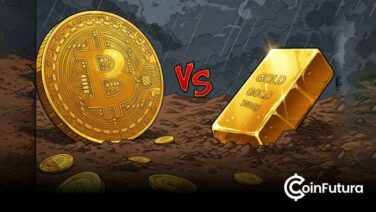
Bitcoin is often called digital gold, but its behaviour is inconsistent. Ideally, scarcity promotes its hedging story in the event of monetary instability. In reality, though, Bitcoin tends to be associated with equity indices during periods of stress.
Bitcoin often moves with technology stocks during global selloffs, as shown by market data. Therefore, the diversification benefits it offers can be lost in the event of widespread de-risking. But in a situation where currency is unstable, Bitcoin may gain demand as a boundaryless currency.
This dual identity causes controversy among the analysts and policymakers. There also exists an opinion of some experts that Bitcoin is a conditional hedge and not a safe haven. Thus, investors need to evaluate context in order to give defensive value to Bitcoin.
Gold, Crypto, and Shifting Capital Flows
During a geopolitical crisis, gold traditionally increases since investors want a secure environment and ease of movement. Crypto can, however, compete with similar capital in the face of extended uncertainty. With the loss of trust in conventional mechanisms, new players might join digital assets.
However, concurrent falls in the price of gold and Bitcoin may indicate widespread liquidity pressure. In these instances, investors can dispose of both assets to get cash. Thus, not every crisis is profitable to alternative assets.

The capital allocation decision in different asset classes is also influenced by market cycles. The US dollar may decline, gold may rise, and crypto may follow. However, the correlations change with time and investors need to keep a keen eye on the macroeconomic indicators.
Sanctions, Energy Markets, and Real World Usage
Financial restrictions and sanctions are the factors that tend to raise interest towards cryptocurrencies. Digital assets have the potential to provide cross-border transaction opportunities when access to banking systems becomes narrow. Nevertheless, the authorities intensify supervision as well, and the enforcement mechanisms are growing exponentially.
Cryptos also respond to energy markets when there is geopolitical instability. An increase in oil prices can raise inflation expectations, and this can justify the demand for alternative assets. On the other hand, increased electricity prices may decrease the profitability of mining and strain the participants of the network.
Also, in other cases, real-world adoption increases with long durations of instability. The people in weak economies can utilize crypto to save money. Consequently, geopolitical stress has the capability of creating speculative demand drivers and practical demand drivers.
Monetary Policy, Regulation, and Long Term Outlook
Decisions made by central banks have a powerful effect on the cryptocurrency market in tense times. With changes in interest rate expectations, investors reallocate portfolios among bonds, equities, gold and crypto. When interest rates are expected to fall, the opportunity cost of holding non-yielding assets tends to fall.
The decisive factor in the shaping of investor confidence is also influenced by regulatory developments. Governments track sanctions and increased compliance structures related to crypto use. Nonetheless, institutional participation and long term investment can also be promoted by clearer rules.
Conclusion: Navigating Crypto in an Uncertain World
Geopolitical conflicts will keep shaping the cryptocurrency markets in some complicated and dynamic ways. Under different circumstances, digital assets can act as risk assets or other representations of value. Hence, market participants are still required to exercise disciplined analysis, diversification and long term planning.