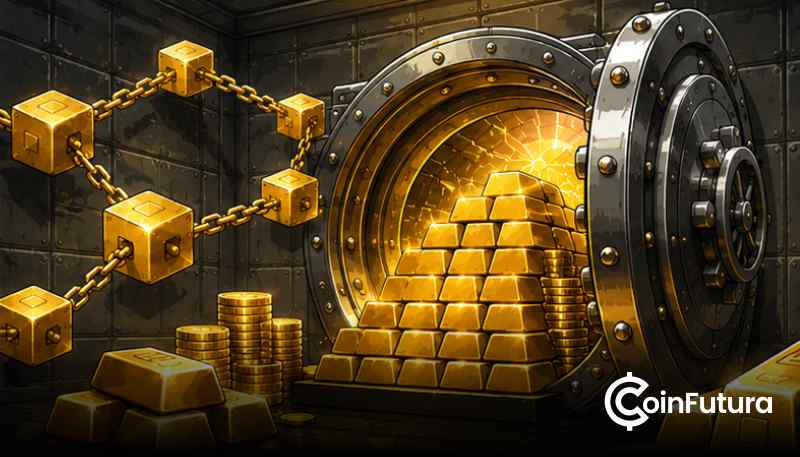
Blockchain technology can enhance the verification process of precious metal reserves through integrating vault reports, audits, oracle networks, and smart contracts. Market participants are able to see the reported reserves and compare them to the token supply sooner as updates occur on chain. But, accurate real-time visibility still relies on accurate physical checks, reliable data source and trusted custodians.
Linking Physical Metals With Blockchain Records
Precious metals are kept in secure vaults and details about ownership and reserves are available on a blockchain, for authorized users. But blockchain does not have the means of examining gold or silver and physical custody will always be required when going through the reserve verification process. Thus, the trustworthiness of each digital record relies on the trustworthiness of the vault operators, independent audits, and data from the physical world.
Typically, tokenized metals are a set quantity of stored gold, silver, or other metal kept by a custodian. Tokens are issued by issuers and the digital supply of metal is maintained to closely match the metal reported within approved vaults. This provides a clear connection between physical storage and digital assets, while there is still a need for regular and independent audits of the link.
Using Oracles for Real Time Reserve Data
Blockchain networks are unable to access vault systems in a direct manner, so the decentralized oracles link smart contracts to trusted data from off-chain reserves. These oracles are accessed from vault APIs, auditors and approved reporting systems and they push updates securely on chain. This means that the information in the reserve will become available more frequently and updates will arrive to the users at more frequent intervals than the traditional reporting periods.
Oracle networks also help to minimize reliance on a single data source, and multiple independent nodes can verify data before publishing. Yet, the system still relies on input that is reliable, and incorrect information from the source can result in incorrect information on the public blockchain. So, greater verification entails using multiple trusted sources, transparent reporting requirements, and independent checks throughout the reserve process.
Automating Reserve Checks With Smart Contracts
Smart contracts calculate the ratio of the metal reserve from the number of tokens that circulate in the public blockchain network. Reserves can be depleted and programmed controls can be implemented to halt further token creation in tokenized systems. As a result, automated checks can help reduce over-issuance, and help ensure that physical assets are matched with the digital supply.
These controls can also increase transparency, and users have the ability to see updates to the reserves and the number of tokens available on the network. In the meantime, issuers can minimize the manual reconciliation, and auditors can have a better picture of the recorded history of all changes to the reserves. Smart contracts can, however, only respond to the available data, so correct reporting continues to be the basis of all automated reserve responses.

Improving Custody, Audits, and Provenance
Blockchain can be used to track changes of custody made by any miner, refiners, transport companies, vaults, wholesalers, or dealers in the entire network. Records continue to be shared and hard to change, and participants have access to a more robust, documented history of each physical asset. This process can help minimise reconciliation issues and can facilitate more transparent traceability of ownership for precious metal supply chains around the world.
Vault reporting can also be increased and deposits, withdrawals and ownership changes can be displayed on a common digital ledger. Moreover, independent auditors are able to make comparisons between the blockchain and physical inventories and they are able to discover important differences quicker. But physical examination and assays are still required and digital documentation is never sufficient on its own to prove authenticity, purity, or even the actual existence of a metal.
Verified origin information can also be linked with subsequent custody and ownership data, while Blockchain can also facilitate responsible sourcing. Thus, in order to enhance, carry, store, and transfer a metal-backed digital asset, buyers have the ability to look at records. However, the benefits of that history will rely on the accurate records of all participants through the whole supply chain.
Understanding Limits, Risks, and Practical Value
Real-time reserve verification enhances transparency but doesn’t mitigate all counterparty risk in tokenized precious metal systems. Custodians, issuers, logistics and auditors are still relied upon by investors and these entities are required to manage the physical assets in the proper manner. Further, if the fraud or poor controls are external to the blockchain, this could lead to loss of confidence in the market, while on-chain records could still be unaffected.
They can impact issuance, trading and redemption, and tokenized metals may be subject to a variety of legal systems. In many regions, interoperability, privacy, implementation cost and various industry standards can also make it difficult to see wider global market adoption. So blockchain is better suited when it is used as an additional layer of support to the existing precious metal market controls.
The most robust model is physical verification, trusted custodial, third-party audits, trusted oracle information and automated blockchain controls. These layers can combine to offer quicker reporting, more transparent ownership histories and more robust ongoing monitoring of reserve backing. While adoption can increase, and real-time verification can enhance the transparency of the markets, physical checks will remain useful to protect the precious metal markets.