

- Ethereum trades near micro support between $2,671 and $2,765 after a short rally phase.
- Intraday resistance near $2,860 remains firm as volume expands across the market.
- Sector models shift toward ecosystem-driven structures that reduce treasury inefficiencies.
Ethereum moves within a narrow trading band as the market tests micro support and responds to rising short-term activity. The market structure holds steady while broader sector trends continue to shift.
Micro Structure Testing Key Levels
Ethereum is seen approaching the support area outlined by More Crypto Online. The zone between $2,671 and $2,765 marks a short-term demand pocket within a corrective pattern. The earlier move stalled at clustered Fibonacci levels, which capped the advance.
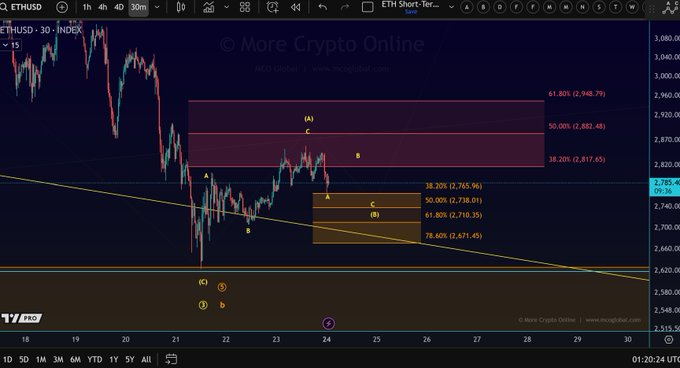
The retracement builds a tight A-B-C pattern to an orange Fibonacci range. Key levels sit at $2,738, $2,710, and $2,671.These areas align with recent internal lows that provided earlier support. The current hesitation suggests traders are respecting this technical cluster.
At the point of writing, Ethereum trades at around $2,799 a day after fluctuating between the mid-2,850 and the low $2,770. Volume increased by over 39%, showing elevated short-term engagement. Resistance remains active between $2,840-$2,860 where sellers continue to react.
Short-Term Support and Resistance Conditions
The market shows repeated rejections near the upper band. Each move into the $2,850 region has triggered quick selling pressure. This has kept direction neutral while traders wait for a break above that zone.
Support in the range of $2780-$2800 is still holding. Ethereum has tested this region several times without slipping into wider losses. A diagonal trendline below the micro range supports the area and aligns with deeper retracement levels.
Failure to hold $2,671 would shift the structure toward a deeper correction. That move could send price toward a lower range linked to earlier consolidation. It would mark an extended phase rather than a trend recovery attempt.
Sector Structures Move Toward New Models
VinCoop notes a sector-wide adjustment in digital-asset structures. A recent view from Matt Hougan described challenges facing traditional Digital Asset Treasuries. Expenses and limited liquidity tend to reduce value when assets remain static.
New models such as W Group offer an alternative. Its structure connects an exchange, blockchain, payments unit, OTC desk, and digital banking arm. These components circulate assets through active operations rather than passive holding.
This model reduces friction that has weighed on older treasury designs. It also builds internal activity through operational revenue. These shifts continue to shape institutional interest across the digital-asset landscape.