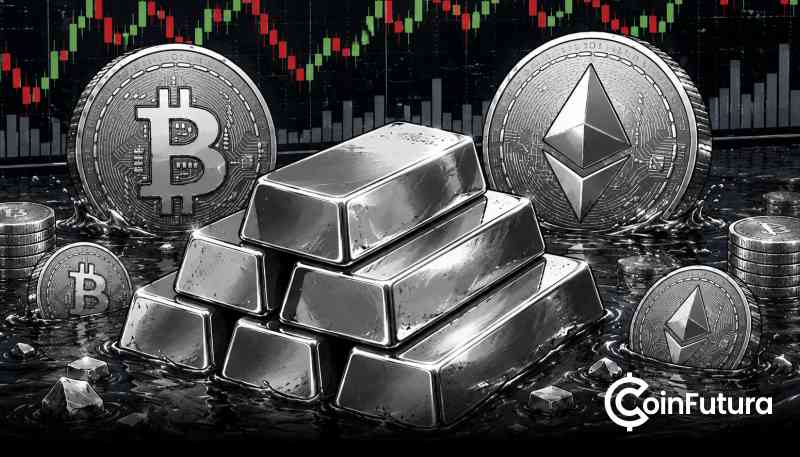
AI and blockchain are reshaping the world of precious metal investing, while digital finance expands access to traditional precious metals. The digital platform now brings gold, silver, platinum and palladium together with tools that are now ubiquitous across crypto and online markets. While these systems offer new options, challenges to consider include custody, regulation, security, pricing and platform reliability.
AI Expands Precious Metal Demand
The digital economy generates extra demand for a number of precious metals due to the need for physical infrastructure for AI growth. Data centers require power systems, semiconductors, connectors, cooling systems and network hardware; many power systems are made of specialty metals. Thus, AI investment has the potential to affect metal demand in numerous ways, including technology investments, grid expansion, and the fast construction of next generation computing facilities.
Silver has a high conductivity and extends its value in electronics and semiconductor production, in addition to its use in many electrical systems. There are new energy systems to help support platinum, and there is some support for palladium in electronics and specialty manufacturing. But the primary forces driving gold remain are primarily monetary demand, central-bank activity, inflation fears, currency trends and geopolitical risk.
Blockchain Expands Direct Metal Ownership
Physical metals can be represented by digital tokens and tokens can correspond to the metal itself inside well recognized, and widely trusted, vaults. Investors can obtain direct exposure without having to build large bars, store it at home or rely exclusively on mining shares and commodity funds. It’s a fractional ownership model, which means that even small investors can purchase a small portion and still have a stake in physical metal.
Access to trade tokenized metals may be available on various platforms all day long and even outside of market hours. Additionally, blockchain records can be used to track the ownership history, movements of vaults, and asset information, all in a secure and tamper-evident manner. These features can help to reduce conflicts and increase transparency, but physical custody remains a key aspect of protecting investors and the safekeeping of assets.
AI Improves Analysis and Risk Controls
AI systems can analyze price data, economic indicators, news, sentiment, and transaction activity, and can do this much faster than research. This enables investors and platforms to spot unusual patterns, shifting relationships, and market risks within the realm of precious metals and associated digital assets. Portfolio rebalancing and scenario testing can be aided with automated tools, while rebalancing can even happen in the event of particularly significant market modifications.

AI can enhance security and machine learning can detect transactional anomalies related to fraud and other suspicious market activities. Furthermore, language tools can be analyzed for unusual patterns in communications and risk systems can be enhanced by additional verified information. But these tools can’t eliminate the risk in investments, and the results they deliver still rely on the quality of the data, model design and responsible monitoring.
Digital Security Becomes More Important
Cybersecurity is at the heart of the ownership records, payments, identities and account access in precious metals investing, and the trend toward going digital is gaining momentum. Investors can safeguard themselves against typical fraud and unauthorized access through encryption, multi-factor authentication, secure payment methods, and threat monitoring. It also provides biometric checks and platforms can employ fingerprint or facial recognition for transaction approval and identity verification.
IoT can also play a role in physical security and sensors can monitor bullion location, storage conditions and tampering in real time. In the meantime, blockchain can be used to link the digital record with specific bars, which can enhance the ability to check provenance and responsible sourcing. Security systems of the future may also contain tools that are resistant to quantum computers, but they are not as developed as current authentication and monitoring tools.
Tokenization Changes Liquidity and Market Access
The traditional way to invest in bullion may involve making large purchases, receiving the bullion in person, arranging storage, and getting access with the dealer during the dealer’s opening hours. Platforms can break down these barriers by subdividing ownership and using digital systems to transact. So, precious metals can be more readily incorporated into diversified portfolios that may include equities, bonds, funds or cryptocurrencies.
Smart contracts can automate some of the terms of the transaction, compliance actions, and transfers, while digital settlement can eliminate delays. In addition, secondary markets can facilitate smaller transactions, as well as provide producers with a wider risk capital base. However, the definition of “regulation” varies by jurisdiction, and governments can define tokenized metals as commodities or securities, depending on their specific rules and regulations.