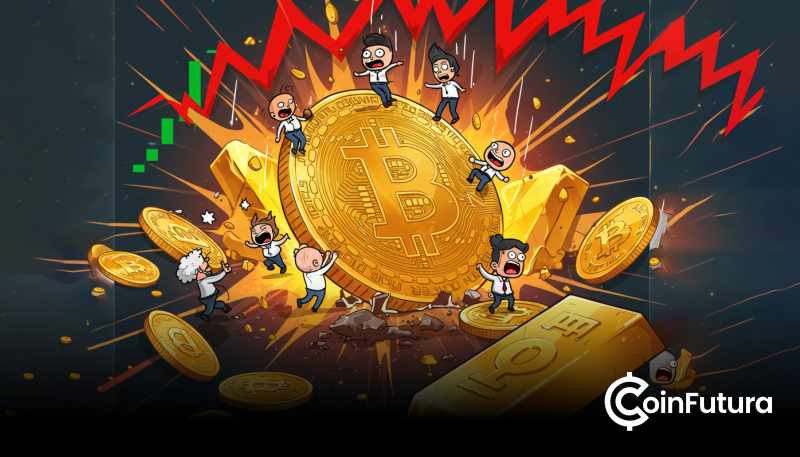
Financial markets tend to snap on economic shocks, bank failures and geopolitical events in the main economies. Thus, investors look for assets that maintain their value, while other assets lose value and are volatile. So, in times of economic instability, precious metals have a high appeal to worldwide capital as they are stable, liquid and protective.
Rising Fear Pushes Investors Toward Precious Metals
Banking crises tend to lead to a loss of investor confidence as they rely heavily on trust and the stability of the market. The more uncertain the situation becomes, the less risky investments will be made, and gold or silver will be bought. Hence, precious metals attract a lot of global investment, as they do not rely on the services of most financial institutions and banking systems.
When financial markets are under tight stress, gold has historically had a very strong performance as an investor’s long-term store of value. Silver, too, will lure in capital inflows; however, there will be bigger price fluctuations during times of economic instability because of its industrial use. Nonetheless, both metals generally benefit from increased buying when investors are anticipating that the markets are being contagiated, that the economies are contracting, and that the currencies are becoming weaker all at once.
Central Bank Policies Strengthen Precious Metal Demand
The central bank tends to lower interest rates during an economic crisis to stabilise the financial markets and economic activities. Moreover, governments have the tendency to boost their expenditure programs, and central banks to expand the money supply through big liquidity support measures. This has led to investors’ concerns about inflation, weakness of currencies, and diminishing purchasing power in major global economies and markets.
A lower interest rate would be good for gold as the value of rare goods increases as real returns on cash savings fall. Similarly, when investors feel that the industrial recovery process is underway, and that the demand for commodities and monetary growth will increase in the future, silver demand will also increase. This has also added an extra layer of capital invested in precious metals, which ensures assets will not lose value from any threat to the currency due to the currency devaluation, inflation or any long term impact of currency devaluation.
Geopolitical Tensions Increase Safe-Haven Demand
Geopolitical conflict is one of the most common causes of uncertainty, as the world’s trade, energy supply and confidence in investment becomes increasingly unstable in conflict times. This is one of the reasons why investors will invest in precious metals when world politics and international events are unsettling. This is because the central banks choose to hold some gold, and the rest of the currency.This is because gold is a diversifier for the stock of traditional currencies held by central banks, which is what attracts institutional demand to gold.

Gold buying was up in several countries as a result of recent geopolitical tension, as diversifying reserves has become a major priority around the world. Meanwhile, private investors boosted their allocation to precious metals as the uncertainty in the market reduced the level of confidence in traditional investment securities. Thus, global demand for gold and silver increased, as both precious metals offered financial security in the turbulent political and economic environment of the world.
Diversification Encourages Long Term Capital Flows
Diversifying investment portfolios is a common practice of investors because, in times of extreme market volatility and uncertainty, risks to their investments rise if they are too heavily positioned in a single investment vehicle. Thus, the demand for precious metals continues to be strong, as they tend to be less correlated with stocks and the most common financial instruments. Gold in particular is a great asset to diversification since it tends to act in a different way when equity markets are down and volatile.
Silver also diversifies due to industrial demand, generating extra growth prospects in times of economic expansion and recovery. Silver, however, is more volatile in general, as all industries and industrial consumption follow worldwide business and manufacturing cycles. However, investors are continuing to buy silver, given that long-term industry trends help ensure future demand in key industries.
Digital Finance Expands Precious Metal Accessibility
Digital investment platforms also make precious metal investing more accessible, as investors can buy gold and silver via easy-to-use online platforms. Furthermore, exchange traded products are appealing to institutional investors due to their liquidity, convenience and market pricing transparency during trading hours. As a result, the involvement of digital access opens up many traditional investment barriers for contemporary investors, leading to a wider distribution of precious metals. Thus, digital access contributes to the broad participation in the precious metals market.
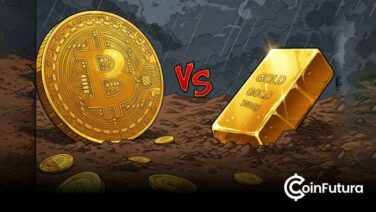
Some investors also make a comparison of precious metals with cryptocurrencies due to the fact that both kinds of property run outside the conventional banking framework and systems. However, gold and silver have a stronger historical case, as their value remained stable in a number of significant financial crises before. As a result, investors continue to flock to precious metals as they seek stability, liquidity, and long-term financial security in times of market volatility.
Conclusion
In times of economic or economic/financial crisis, investors often rush into precious metals as a safe haven from the economic uncertainty and financial instability.Gold is a high quality defensive asset, and silver has defensive appeal as well as strong growth potential in the industrial sector where economic conditions are shifting. Thus, in spite of the volatility of the financial markets, precious metals continue to be significant investments for portfolios as they offer stability, diversification and wealth protection.