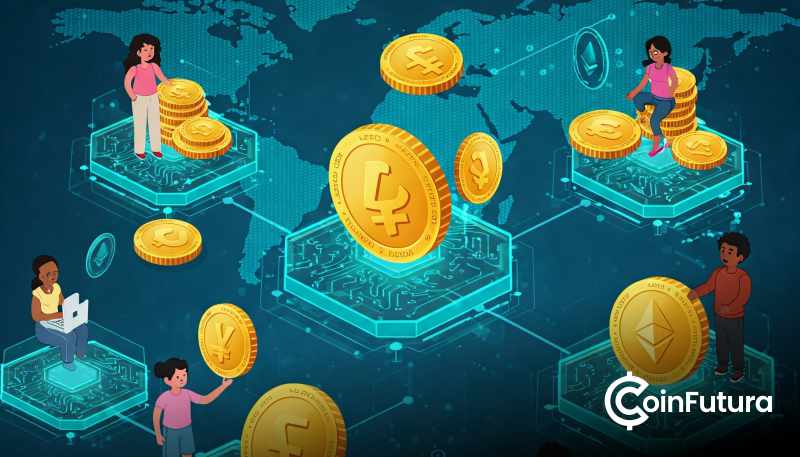
Real World Assets (RWAs) are a new type of finance in which the physical asset is tokenized on the blockchain. These linkages pair traditional assets, like gold, with the decentralized finance ecosystems. As a result, ownership becomes more flexible, transparent and accessible on a worldwide level.
Introduction to Real World Assets in Finance
Real World Assets are assets that have been digitized on blockchain networks and are physical or financial in their essence. These assets include high value assets like precious metals, bonds, real estate etc. To this end, investors have access to markets, which they could not have had before because of the issue of capital and location.
RWAs act as a liaison between traditional finance and decentralised financial systems. Thus, they enable the interaction between physical commodities and blockchain-based trading environments. This integration boosts efficiency and eliminates the need for intermediaries in the centralized system.
The main process of the modern financial systems is tokenization. Makes assets digital, which are documented on blockchain ledgers. This effectively results in the division of assets, their transferability and a global handling of them.
Tokenization of Precious Metals
Gold and silver are among the most popular precious metals that are used in RWA tokenization systems. A single token will normally be a fixed amount of a physical metal that is kept in safekeeping. One token can be 1 ounce of gold, for instance.
There are companies such as Paxos and Tether Gold that issue blockchain-based gold tokens. Thus, investors will be able to exchange tokens for tangible gold, provided they meet the stipulations. This will enhance the confidence in the relationship between digital records and physical reserves.
Tokenization makes markets that were previously slow and limited more liquid. Furthermore, investors have the ability to trade fractions of metals at any time of the day on any of the exchanges in the world. This lowers storage, transport and entry cost issues.
Blockchain Infrastructure and Asset Ownership
Blockchain technology provides secure, transparent, and verifiable asset ownership records for tokenized assets. Distributed ledgers are permanent records of every transaction. As a result, the risk of fraud and data manipulation is minimised.
Key operations, including, transfers and settlement operations, are automated with smart contracts. In these cases, therefore, intermediaries such as brokers and custodians lose their relevance. This not only enhances speed but also reduces transaction costs.
Another benefit of blockchain systems is that it allows for fractional ownership of high-value assets, such as gold. You are able to buy a fraction of the physical unit rather than a whole one. It makes participation easier for smaller investors as a consequence.

Integration with Decentralized Finance Systems
The uptake of precious metals tokens as financial assets continues to grow in DeFi platforms. Lending protocols typically use gold to back their tokens. So, liquidity is created with otherwise dormant assets, namely physical assets.
Users can also generate yield in a DeFi ecosystem with tokenized commodities. Moreover, stablecoin systems might utilize the worthiness of genuine resource backings for value stability. This is to boost trust in such decentralized monetary systems.
RWAs provide an alternative to banking transactions that have a traditional delay. This means that cross-border investment can be done more quickly and efficiently. This will improve financial inclusion for emerging and developed markets.
Benefits, Risks, and Market Limitations
Tokenized precious metals offer improved transparency, efficiency, and accessibility for investors. The blockchain record helps to verify the ownership data in real-time. As a result, there is a much higher level of trust in asset management systems.
But the lack of regulation is an obstacle in all markets. Ownership of a digital asset is governed by various rules in various jurisdictions. As a result, this compliance is imperative for platforms and issuers.
Another concern in RWA systems is custody risk, and valuation risk. The physical objects should be a faithful copy of their digital counterparts. Thus, for maintaining the stability of the market, secure storage and regular audits are required.
Future Outlook of Tokenized Precious Metals
RWAs are increasingly being implemented as institutional investors are coming in. Commodity investments are becoming popular in large financial organizations. Thus, there is a projected rapid expansion of the market.
Technological advancements address the blockchain scalability and interoperability problem between networks. Also, the regulations are slowly converging around the world. This will help to drive deeper institutional engagement in the tokenized market.
RWAs will revolutionize the investment model for precious metals. As such, digital and traditional systems will coexist and continue to exist in the foreseeable future. This upgrade enhances efficiency, transparency and global financial integration.